


SPECIALIST CARE · SOUTH WEST SYDNEY
Skin Lesion Removal Surgery in South West Sydney
Specialist Plastic Surgeons Dr Varun Harish and Dr Michael Kernohan provide skin lesion removal and skin cancer surgery. Consultations are available at Pure Visage in Gledswood Hills, South West Sydney.
UNDERSTANDING YOUR CARE
Don’t ignore a changing skin lesion.
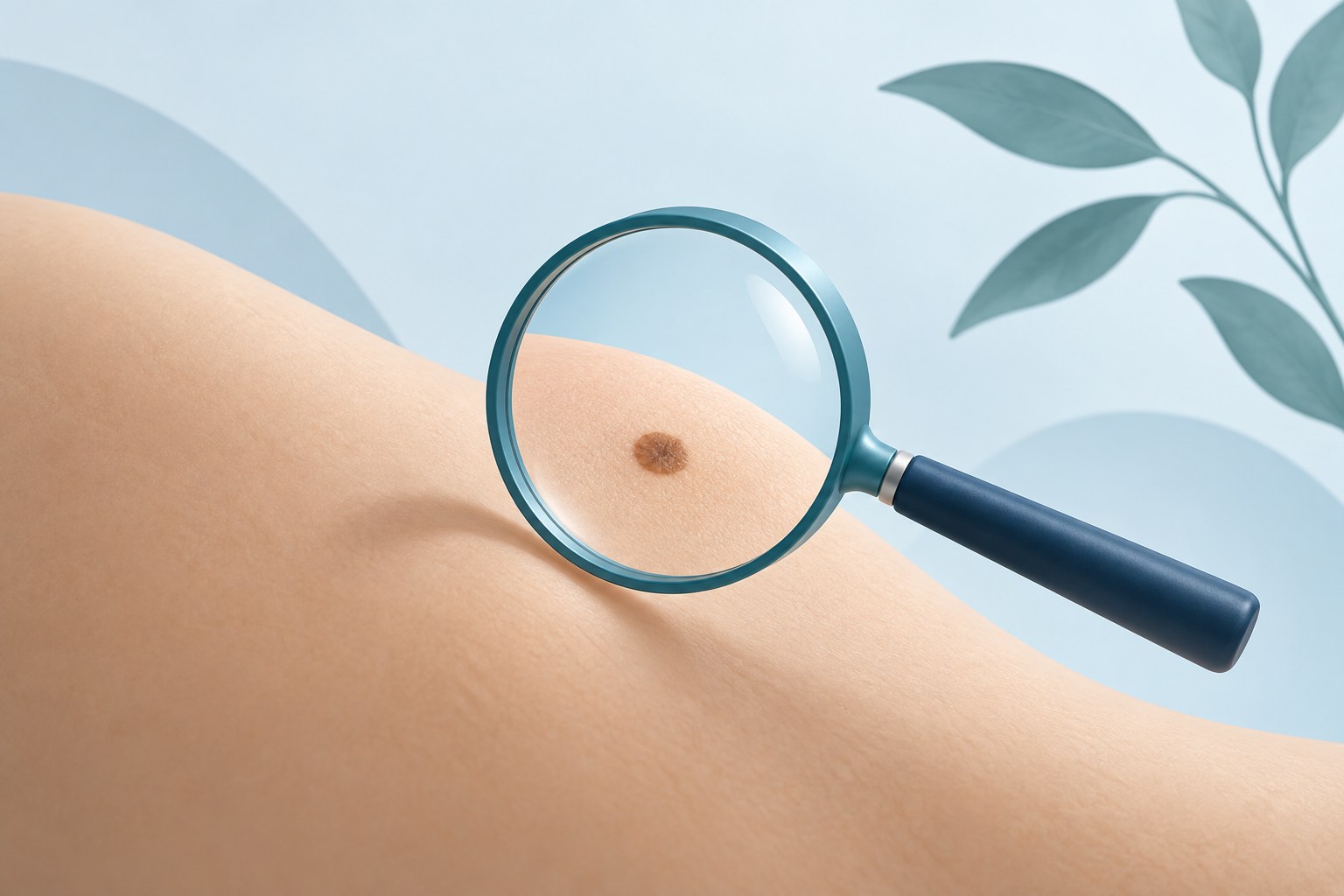
A skin lesion is an area of skin that differs from the skin around it. It may be benign or require further investigation. Appearance alone does not establish a diagnosis: your history, examination and sometimes a tissue sample help guide the next step.
Arrange assessment of a new, changing, bleeding, or non-healing lesion. Your consultation provides time to review the findings, discuss suitable treatment options, and understand the proposed plan.
BEFORE YOUR VISIT
Bring the details that matter.
- Your referral and pathology or biopsy reports
- Details of previous skin treatments
- A current medication list and allergies
- Your questions and practical concerns
Ask the team how to provide medical documents securely. Please keep online enquiries brief.
Understanding skin lesions
Skin lesions may be benign, precancerous, or cancerous. Assessment and, where needed, a biopsy help establish a diagnosis and guide treatment.
Benign skin lesions
Many moles, skin tags, cysts, and lumps are benign. Removal may be considered for symptoms, diagnostic uncertainty, or personal concerns. Your clinician will discuss whether removal is appropriate and the scar it may leave.
Precancerous skin changes
Solar (actinic) keratoses are areas of sun-damaged skin that may develop into squamous cell carcinoma. Bowen’s disease is squamous cell carcinoma in situ, where abnormal cells remain within the outer skin layer. These conditions need an individual assessment and treatment plan.
Cancerous skin lesions
Basal cell carcinoma, squamous cell carcinoma, and melanoma have different treatment pathways. A lesion’s appearance alone cannot reliably confirm its type. A tissue sample may be required.
Who gets skin cancer and why?
Ultraviolet (UV) radiation from the sun is a major cause of skin cancer. People of any skin colour can develop skin cancer, although risk varies. Get to know your skin and arrange assessment if you notice a new or changing spot, an unusual growth, or a sore that does not heal.
Factors that can increase risk include fair skin that burns easily, substantial UV exposure, a personal or family history of skin cancer, and numerous or unusual moles. Discuss your own risk and the frequency of skin checks with your clinician.
The main types of skin cancer
Basal cell carcinoma (BCC)
BCC often grows slowly and rarely spreads to distant parts of the body. It can still damage nearby tissue if untreated. Treatment depends on its type, size, and location. Read about BCC surgery.
Squamous cell carcinoma (SCC)
SCC may appear as a growing, scaly, crusted, or ulcerated lesion, often on sun-exposed skin. Some SCCs can spread, making timely assessment and treatment important. Read about SCC surgery.
Melanoma
Melanoma can arise in an existing mole or as a new spot and can occur anywhere on the body. Treatment is guided by the pathology and stage. Further excision and, in selected cases, lymph-node assessment may be discussed. Read about melanoma surgery.
TREATMENT PLANNING
The decisions to discuss.
01
Assessment first
Discuss when the lesion appeared, how it has changed and any symptoms or previous treatment. Bring available pathology reports.
02
Biopsy or removal
A clinician may recommend sampling part of the lesion or removing it for laboratory examination. The approach depends on the clinical question and the site.
03
Results & next steps
Ask how and when you will receive results, whether further treatment could be needed and who will arrange follow-up.
Treatment and reconstruction for a skin lesion
Treatment depends on the diagnosis, size, depth, and location of the lesion, as well as your health and preferences. Options for selected superficial lesions may include topical or other non-surgical treatments. Surgical excision is commonly used for invasive skin cancers and allows the removed tissue to be examined by a pathologist.
Your surgeon will explain the proposed margins, likely scar, and how the wound may be repaired. Complex lesions or lesions on areas such as the face may require more detailed reconstructive planning. Some wounds can be closed directly with stitches; others need a flap or graft.
Direct closure
When appropriate, the edges of the wound are brought together with stitches. The position and tension of the closure influence the scar and recovery plan.
Local skin flap
A flap moves nearby skin and tissue into the wound while maintaining a blood supply. The approach aims to repair the defect while considering function and appearance. Results vary and a scar remains.
Skin graft
A graft transfers skin from another area of the body. It needs to establish a blood supply at the new site and must be protected during healing. Both the graft and donor area require wound care.
AFTER YOUR PROCEDURE
Recovery is individual.
The wound care plan depends on the size, position and method of removal. Ask about dressings, stitches, washing, work and exercise before leaving your appointment.
Discuss risks before deciding.
Possible risks include bleeding, infection, scarring, altered sensation and delayed healing. The procedure and your health affect your individual risk.
Ask which warning signs require prompt contact with your surgical team, and how to reach them after hours.
Follow-up after skin lesion and skin cancer treatment
Make sure you know how and when you will receive your pathology result. The result may show that further treatment is needed. Your team will explain the next steps and arrange appropriate wound review.
After skin cancer treatment, ongoing skin surveillance is important. Agree on a follow-up plan with your treating doctors, monitor your skin between visits, and report new or changing lesions or new lumps, including in the neck, armpit, or groin.
Skin lesion surgery costs and Medicare
Fees vary with the complexity of removal and reconstruction, the procedure setting, and the care required. Ask for an individual estimate covering surgeon, anaesthetist, hospital, and pathology charges where relevant.
Medicare or private health insurance benefits may apply to eligible medically necessary procedures. Eligibility and out-of-pocket costs depend on the procedure and your circumstances; cosmetic removal may not qualify. Confirm your estimate and benefits before treatment. Read Fees & Medicare information.


Choosing a surgeon and preparing for your visit
Your GP can help you choose an appropriate clinician. At your consultation, ask about the diagnosis, treatment options, qualifications and experience relevant to your procedure, likely scar, recovery, and risks. Bring your referral, pathology reports, medication list, and questions.
MAKE SPACE FOR YOUR QUESTIONS
Take these questions to your consultation.
- Why is biopsy or removal being recommended?
- Will the tissue be sent for pathology?
- What alternatives are appropriate for this lesion?
- How will I receive the result and follow-up plan?
Is it necessary to see a plastic surgeon to get rid of the skin lesion?
Not every skin lesion needs a plastic surgeon. Your GP or dermatologist can assess many lesions and advise whether specialist removal or reconstruction is appropriate, particularly for complex or cosmetically sensitive areas.
How long does it take to get the skin lesion removed?
The duration of the procedure is dependent on the complexity of the intervention. You will find out the details about the surgical plan during the initial consultation with the plastic surgeon.
Are these real before-and-after photographs?
No. The images on this page are AI-generated conceptual artwork. They do not depict patients, demonstrate a surgical result or replace medical assessment.
EXPLORE RELATED CARE
Understand the next part of your care.
BCC Surgery
Understand the options for basal cell carcinoma (BCC), including removal and planning the repair of the skin afterwards.
SCC Surgery
Specialist assessment and surgical planning for squamous cell carcinoma (SCC), with attention to the diagnosis, site and follow-up you may need.
Melanoma Surgery
Understand the surgical pathway after a melanoma diagnosis, from review of your pathology to decisions about excision and further assessment.
Further reading: Healthdirect: skin cancer and melanoma. General information only; your treating clinician can advise on your circumstances.
PURE VISAGE · GREGORY HILLS
Let’s talk about your next step.
Contact our team about a specialist consultation. Bring your referral and available pathology reports so the discussion can focus on your individual care.
Suite 17, 13 Digitaria Drive, Gledswood Hills NSW 2557 · 1300 393 899
Explore related care
Explore our plastic surgeons · Patient Information · Referrer information