


SPECIALIST CARE · SOUTH WEST SYDNEY
SCC surgery in South West Sydney
Specialist assessment and surgical planning for squamous cell carcinoma (SCC), with attention to the diagnosis, site and follow-up you may need.
UNDERSTANDING YOUR CARE
Start with a clear assessment.
SCC is a keratinocyte skin cancer. Some SCCs can spread, so assessment and treatment should not be delayed. Features of the cancer and your medical history help determine whether additional investigations or multidisciplinary care are appropriate.
At Pure Visage, your consultation provides time to review the information, consider alternatives and ask what the proposed plan means for you.
BEFORE YOUR VISIT
Bring the details that matter.
- Your referral and pathology or biopsy reports
- Details of previous skin treatments
- A current medication list and allergies
- Your questions and practical concerns
Ask the team how to provide medical documents securely. Please keep online enquiries brief.
SIGNS & RISK
What should you look for?
Cutaneous SCC may look like a persistent scaly or crusted patch, a firm raised bump, or a sore that bleeds or does not heal. It often develops on sun-exposed skin, including the face, ears, neck, forearms and hands, but can occur elsewhere. Appearance alone cannot confirm SCC. Have a new, changing or non-healing spot assessed by a clinician.
Possible warning signs
A lesion that grows, becomes tender, bleeds, crusts or repeatedly breaks down deserves review. SCC in the mouth or genital area needs assessment through the appropriate clinical pathway; this page focuses on skin SCC.
Factors that can raise risk
UV exposure and tanning beds, fair skin, older age, previous skin cancer, actinic keratoses and reduced immune function can increase risk. People with any skin tone can develop SCC. Your clinician can discuss sun protection and a suitable skin-check plan.
If a spot is changing quickly or is not healing, arrange an assessment promptly rather than waiting for a particular number of weeks.
TREATMENT PLANNING
The decisions to discuss.
01
Review the diagnosis
Bring the biopsy report, referral and previous treatment history. Your specialist considers the cancer’s features and the surrounding area.
02
Remove & examine
Surgery may remove the cancer with a surrounding margin. Laboratory examination helps assess the diagnosis and whether the margins are clear.
03
Coordinate follow-up
Some higher-risk cancers require additional treatment or specialist team input. Your clinician will explain which follow-up arrangements apply.
OPTIONS FOR YOUR CARE
How SCC treatment may be planned.
Treatment depends on whether the SCC is in situ or invasive, its size and site, pathology findings, previous treatment and your health. The team can explain which options are suitable and whether another specialist should be involved.
Surgical excision
For many invasive SCCs, the cancer is removed with a margin of surrounding skin and sent for pathology. If cancer remains at an edge, further surgery or another treatment may be recommended. The wound may be closed with stitches, a local flap or a skin graft.
Mohs surgery and referral
Mohs micrographic surgery checks the edges of removed tissue in stages. It may be considered for selected higher-risk or difficult-to-treat sites. It is performed by appropriately trained specialists; ask whether referral is appropriate for your case.
Other treatments
For SCC in situ or selected superficial lesions, a treating clinician may consider treatments such as topical therapy, curettage, freezing or photodynamic therapy. Radiation therapy or drug treatment may be considered for certain advanced cases through a specialist team. Availability varies; these are not all offered at Pure Visage.
SCC can sometimes spread, particularly when higher-risk features are present. Your clinician may examine nearby lymph nodes or recommend further tests and multidisciplinary review when indicated.
BEFORE & AFTER SURGERY
Prepare for your procedure and follow-up.
At your consultation
Bring your referral, pathology or biopsy results, a medication list and details of earlier treatment. Ask about the planned excision, anaesthetic, wound repair, expected scar, pathology review and follow-up.
On the day
Some skin procedures are performed under local anaesthetic; larger or more complex operations may need another setting or anaesthetic. Follow your team’s instructions about fasting, medicines and transport. Do not stop prescribed blood-thinning medicines unless your clinician tells you to.
After treatment
Healing time and time away from work or activity depend on the wound and repair. Follow written wound-care advice, attend the planned review and ask how the pathology result will be communicated. Arrange ongoing skin checks with your treating team.
AFTER YOUR PROCEDURE
Recovery is individual.
Discuss wound care, activity restrictions and how results will be communicated. Follow-up may include checks of the treated site and ongoing skin surveillance.
Discuss risks before deciding.
Possible risks include bleeding, infection, scarring, altered sensation, delayed healing and the need for further treatment if margins are not clear. SCC can recur or another skin cancer can develop later. The procedure, tumour features and your health affect individual risk.
Ask which warning signs require prompt contact with your surgical team, and how to reach them after hours.
FEES & MEDICARE
Understand likely costs before treatment.
Fees vary with the lesion, complexity, anaesthetic, facility and any reconstruction. Ask for an itemised estimate covering the surgeon, facility, anaesthetist and pathology where relevant. Medicare or private health benefits may apply when eligibility criteria are met; out-of-pocket costs vary.

Read about fees and Medicare or contact the clinic to discuss a consultation and estimate.
MAKE SPACE FOR YOUR QUESTIONS
Take these questions to your consultation.
- Are there higher-risk features in my SCC?
- Will I need further tests or another specialist?
- What repair is likely after removal?
- Who will coordinate follow-up and skin checks?
How is SCC different from BCC?
They arise from different skin cells and can behave differently. SCC has a greater potential to spread than BCC; your own risk depends on the findings in your case.
Will surgery be the only treatment?
It may be, but higher-risk or advanced SCC can require additional treatment. Your specialist will discuss the recommendation after considering the clinical and pathology findings.
Do the images show a treatment result?
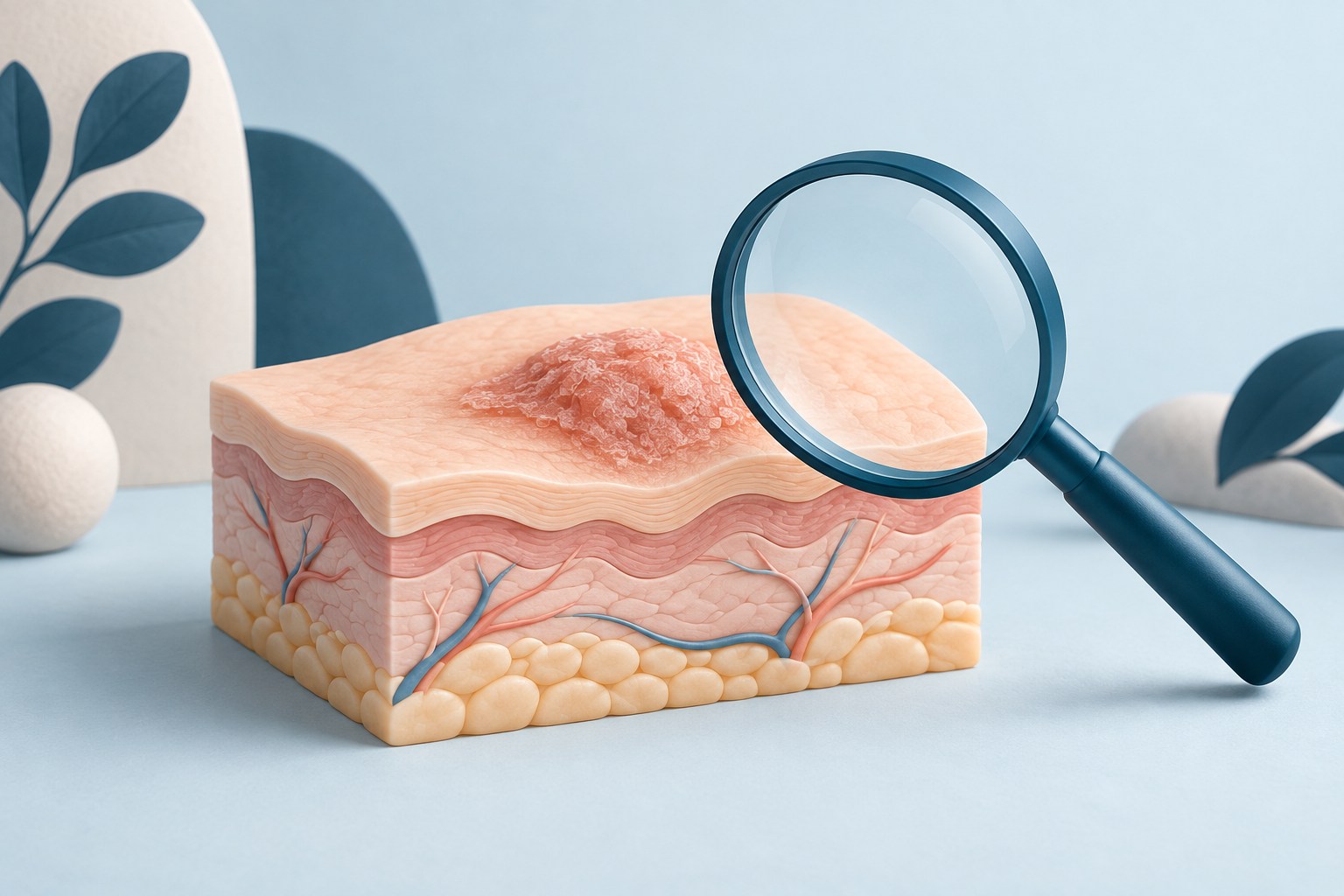
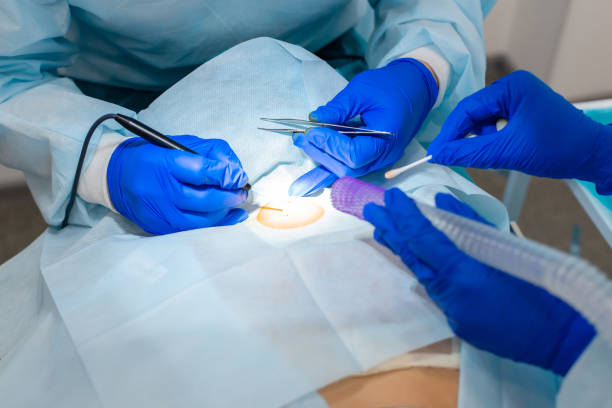
No. The hero artwork is conceptual; the other photographs illustrate surgery and fees. They are not before-and-after results or a substitute for medical assessment.
How is SCC diagnosed?
A clinician examines the spot and may recommend a biopsy. Pathology confirms the diagnosis and reports features that guide treatment. A photograph alone cannot diagnose SCC.
What is the difference between excision and Mohs surgery?
Standard excision removes the cancer with a planned margin and pathology reviews the tissue. Mohs surgery checks margins in stages during the procedure. Your clinician can explain which approach or referral is appropriate.
Can SCC return after treatment?
It can recur, and having one SCC also raises the chance of another skin cancer. Ask about your pathology results, follow-up schedule and sun protection.
Will Medicare cover SCC removal?
Some services may attract Medicare benefits when eligibility criteria are met. Ask the clinic for an individual estimate, including any facility, anaesthetic and pathology costs.
EXPLORE RELATED CARE
Understand the next part of your care.
Skin Graft Surgery
Learn why a skin graft may be recommended, how it differs from a flap and what to discuss about care of both the graft and donor site.
Skin Cancer Reconstruction
Planning the repair is part of planning your care. Explore how your surgeon balances wound closure, function and appearance after skin cancer removal.
Further reading: Cancer Council: BCC and SCC care guide · Cancer Council: surgery for skin cancer · Healthdirect: SCC · Dr Kernohan’s SCC article. General information only; your treating clinician can advise on your circumstances.
PURE VISAGE · GREGORY HILLS
Let’s talk about your next step.
Contact our team about a specialist consultation. Bring your referral and available pathology reports so the discussion can focus on your individual care.
Suite 17, 13 Digitaria Drive, Gledswood Hills NSW 2557 · 1300 393 899
Explore related care
Explore our plastic surgeons · Patient Information · Referrer information