
Book Online

PURE VISAGE

How can we help?

Find specialists, services and patient information.

SPECIALIST CARE · SOUTH WEST SYDNEY

Melanoma surgery in South West Sydney

Clear information about melanoma assessment, surgery and follow-up—so you can discuss the next step with your treating team.
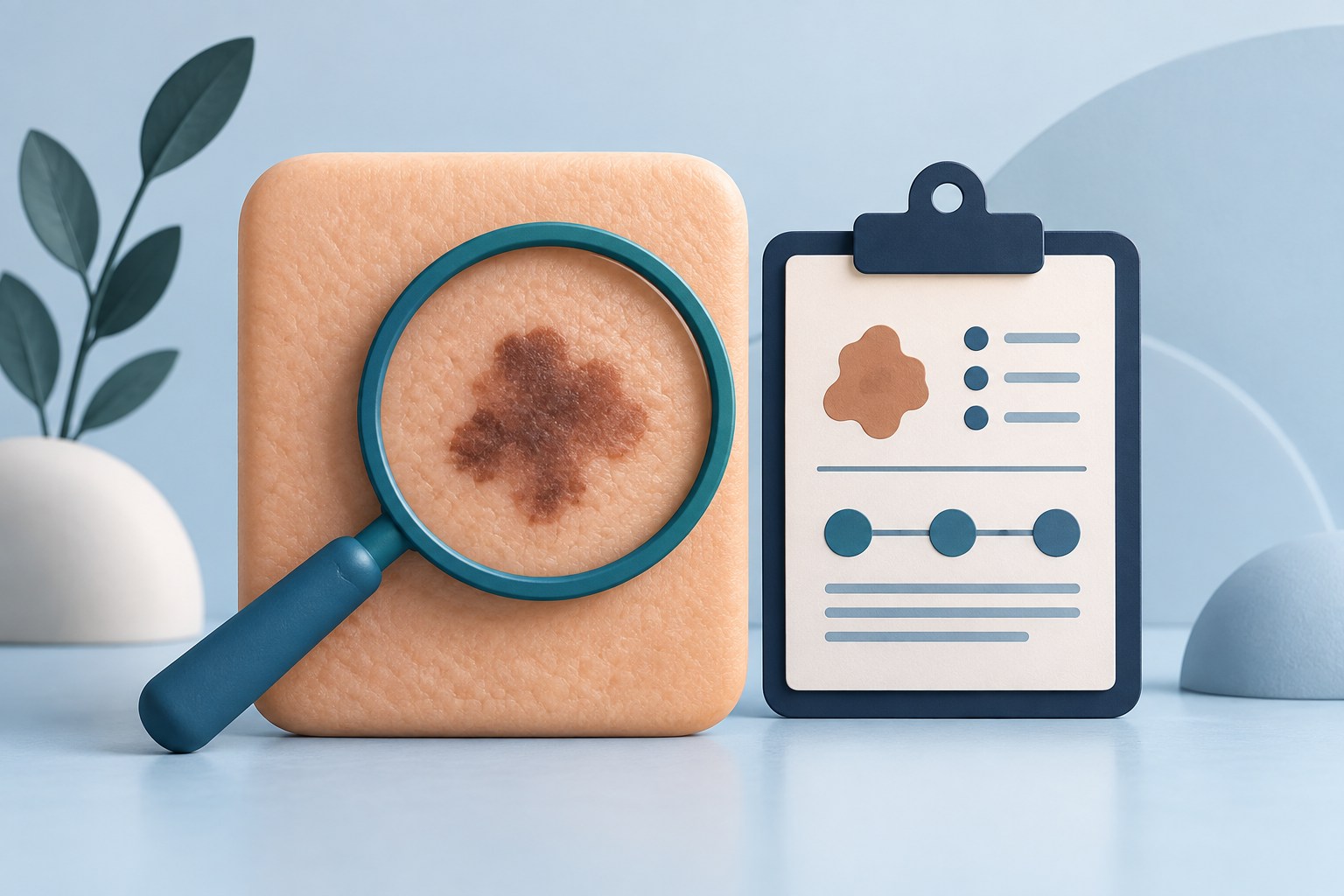
Conceptual illustration for Melanoma Surgery; not a patient photograph
Conceptual illustration · not a patient result or diagnostic guide.

UNDERSTANDING YOUR CARE

Start with a clear assessment.

Melanoma is a skin cancer that begins in pigment-producing cells called melanocytes. It can develop anywhere on the body, including areas that receive little sun. A new or changing spot should be assessed by a qualified health professional; appearance alone cannot confirm or rule out melanoma.

If a biopsy has confirmed melanoma, the pathology report and your individual circumstances help guide whether further surgery or other assessment is appropriate. Your treating team can explain the options and coordinate care when needed.

The word melanoma spelled with letter tiles

BEFORE YOUR VISIT

Bring the details that matter.

  • Your referral and pathology or biopsy reports
  • Previous skin check or biopsy details
  • Your current medicines, allergies and relevant medical history
  • Your questions and practical concerns

Ask the team how to provide medical documents securely. Please keep online enquiries brief.

NOTICE A CHANGE

Know what is changing on your skin.

Melanoma may appear as a new spot or as a change in an existing mole. Signs worth getting checked include asymmetry, an irregular edge, varied colour, change in size or shape, or a spot that is evolving, itchy or bleeding. Some melanomas do not match these patterns, so a checklist cannot diagnose or exclude cancer.
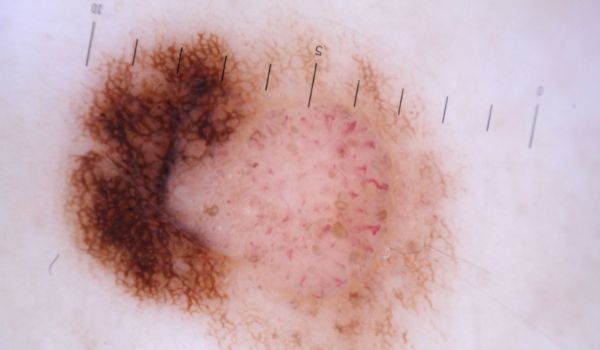
Close-up image of a pigmented skin lesion
Illustrative lesion image. A photograph cannot confirm or rule out melanoma.

Check all areas of your skin, including the scalp, palms, soles and between the toes. If you notice a new, changing, unusual or non-healing spot, arrange a medical assessment promptly. If you are concerned about a rapidly changing or bleeding lesion, contact a health professional for advice.

ASSESSMENT

How melanoma is confirmed.

A clinician examines the spot and may recommend a biopsy. A pathologist examines the tissue and reports whether melanoma is present and relevant features. Further tests are considered when indicated by the findings and clinical assessment.
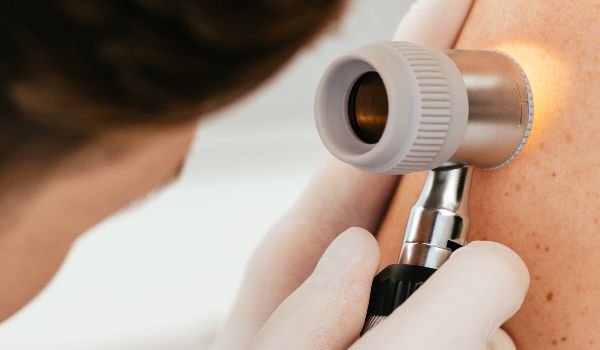
Clinician examining a skin lesion with a dermatoscope
A clinician may examine a changing spot and recommend biopsy when appropriate.

Bring any biopsy or pathology results to your appointment. Do not delay assessment while comparing a spot with online photographs.

TREATMENT PLANNING

The decisions to discuss.

01

Review your pathology

Your pathology report may describe tumour thickness (Breslow thickness) and ulceration. These findings, together with examination and other clinical information, help the team assess the melanoma.

02

Plan a wider excision

A wide local excision removes additional skin around the biopsy site. The margin and depth are guided by the melanoma findings, location and current clinical recommendations; there is no single margin that applies to every person.

03

Consider further assessment

A sentinel lymph node biopsy may be discussed for some melanomas to help with staging. It is not suitable or necessary for everyone. If melanoma is more advanced, a multidisciplinary team may discuss options such as medicines, radiotherapy or surgery based on the individual case.

AFTER YOUR PROCEDURE

Recovery is individual.

Recovery depends on the size and location of the excision and how the wound is repaired. Your surgeon will give instructions for wound care, activity and review of the pathology results. Ask who will coordinate follow-up skin checks and what changes should prompt another review.

Discuss risks before deciding.

Possible risks vary with the procedure and may include bleeding, infection, wound-healing problems, scarring, altered sensation or a need for further treatment. Your surgeon can explain the risks that apply to you, including any functional or reconstructive considerations.

Ask which warning signs require prompt contact with your surgical team, and how to reach them after hours.

Read about surgical risks

MAKE SPACE FOR YOUR QUESTIONS

Take these questions to your consultation.

  • What do the findings in my pathology report mean?
  • What excision margin is recommended and why?
  • Should sentinel lymph node biopsy be considered?
  • Who will arrange my ongoing melanoma follow-up?
Why might I need more surgery after a biopsy?

The initial biopsy may confirm the diagnosis and provide information used to plan care. A further excision may be recommended to remove an appropriate margin around the biopsy site.

Does everyone need lymph node surgery?

No. It is considered for selected patients after reviewing melanoma features and overall circumstances. Your team can explain likely benefits, limitations and risks.

Can I diagnose melanoma using a checklist or photograph?

No. Warning signs and online images are not diagnostic. A health professional can assess a spot and arrange a biopsy when appropriate.

EXPLORE RELATED CARE

Understand the next part of your care.

Skin Graft Surgery

Learn why a skin graft may be recommended, how it differs from a flap and what to discuss about care of both the graft and donor site.

Read skin graft surgery

Skin Cancer Reconstruction

Planning the repair is part of planning your care. Explore how your surgeon balances wound closure, function and appearance after skin cancer removal.

Read skin cancer reconstruction

Further reading: Cancer Council Australia: melanoma care guide · Signs and risk factors · Tests for melanoma. These links provide general information; your treating clinician can advise on your circumstances.

PURE VISAGE · GREGORY HILLS

Let’s talk about your next step.

Contact our team to ask about a specialist consultation. Bring your referral and available pathology reports so the discussion can focus on your individual care.

Suite 17, 13 Digitaria Drive, Gledswood Hills NSW 2557 · 1300 393 899

LET’S PLAN YOUR VISIT

Request an Appointment

Leave your details and a brief message. Our team will be in touch.

Pure Visage — Appointment Requests

Patient Privacy & Health Information Notice

What patients need to know about how Pure Visage handles health information, communications, photographs and consent.

Privacy is part of your care. We collect personal and health information so we can respond to enquiries, provide safe healthcare, communicate with you and operate the practice. Our full Privacy, Health Information & Data Protection Policy is available on our website or from our team on request.

What information we collect and why

Your relationship with Pure Visage may begin before you become a patient — through our website, telephone, email, social media or an online enquiry. We may collect your contact details, the procedure or service you are interested in, your questions and communication preferences. If you proceed to consultation or treatment, we collect the health and clinical information reasonably necessary for your care.

We use this information to respond to you, arrange appointments, provide assessment and treatment, maintain your medical record, manage accounts and follow-up, and communicate with healthcare providers involved in your care. Where relevant and lawful, information may be shared with providers such as your GP or referrer, hospitals or day surgeries, anaesthetists, pathology or radiology services, Medicare, private health insurers and professional or technology providers acting for Pure Visage.

Information, education and marketing

We may use your contact details and the procedure or service you have expressed an interest in, to send relevant procedure information, educational resources, follow-up information, eNews, practice updates, events or information about our services. This supports patients and prospective patients to make informed decisions.

You can unsubscribe from marketing emails at any time using the unsubscribe link or by contacting us. Opting out of marketing does not stop communications needed to respond to an active enquiry or manage appointments, treatment, accounts, safety, consent or ongoing care. We do not use sensitive health information for direct marketing without the consent required by law.

Heidi Health — AI-assisted consultation notes

Pure Visage uses Heidi Health during consultations as an AI-assisted clinical documentation tool. Its purpose is to allow your doctor to focus more fully on you and the clinical conversation, rather than spending the appointment typing or reconstructing notes afterwards. Heidi processes the consultation conversation to help prepare accurate and detailed clinical notes, letters and related correspondence.

In Heidi Health’s standard transcription workflow, the consultation audio is processed only to generate the transcription and draft documentation. Heidi states that real-time consultation audio is not retained after processing. Heidi states that consultation data, session transcriptions and generated notes are not used to train its AI model and that Australian users have local data-residency arrangements.

Pure Visage does not keep a separate permanent audio recording of the consultation through Heidi. The written documentation is then managed as part of our approved clinical workflow and medical record.

Heidi does not make clinical decisions and does not independently determine whether you are suitable for treatment or surgery. Your practitioner retains full professional responsibility and control. The generated documentation is reviewed and, where necessary, edited and verified by the treating practitioner before it forms part of the final clinical record.

We explain the use of Heidi and obtain your verbal or written permission in accordance with our clinical workflow. Its use is voluntary. You may decline its use or ask for it to be stopped at any point during your consultation, without affecting the standard of care you receive.

Clinical photographs and media consent

Clinical photographs may be taken for assessment, treatment planning, clinical documentation, comparison and follow-up. They are health information and are stored in a separate repository with restricted access. Consent is obtained for the taking, use and storage of clinical images.

Consent to clinical photography does not give Pure Visage permission to publish or advertise your images. We obtain separate, specific written media consent before using identifiable photographs, video or other patient information for our website, social media, educational material or advertising. Only approved copies are prepared for this purpose and kept separately from the underlying clinical photograph library. You may refuse media consent without affecting your care.

Other consents and choices

Acknowledging this privacy notice is not a blanket consent and does not replace other permissions that may be required during your care. Depending on your circumstances, we may separately ask for consent or acknowledgement for communication preferences and permission to leave telephone or voicemail messages; sharing information relevant to your care; clinical photography; separate media use of photographs or video; treatment and surgery; hospital documentation and consent; informed financial consent (IFC); and billing and payment arrangements.

These permissions are not interchangeable. For example, consent to take clinical photographs does not authorise their use in advertising or social media. Where the law permits, consent for a future use may be withdrawn, although we may still need to retain information forming part of your medical record or required by law or professional obligations.

Telephone calls, social media and communications

Telephone calls may be recorded for quality, training and continuity of care. Where recording is enabled, callers are informed and may ask not to be recorded where reasonably practicable. Relevant communication records may be used by authorised staff to understand previous discussions and provide continuity of service.

Pure Visage uses social media, including Facebook, Instagram, TikTok, YouTube and LinkedIn, to provide information about our practice, procedures and services. Our social media and advertising are managed in accordance with AHPRA and Medical Board of Australia advertising requirements. Social media is not an appropriate place for confidential medical discussions; if you contact us there, we may acknowledge your enquiry and direct you to our team through an appropriate private communication channel.

Protecting and accessing your information

Pure Visage uses a dedicated medical records clinical system and a separate business system, which have restricted access, confidentiality requirements and managed cybersecurity measures appropriate to the information we hold. Identifiable clinical photographs are held in a separate, restricted repository, and photographs approved for external media use are prepared and held separately from the clinical photograph library.

Access is limited according to role and legitimate need. Staff and contractors do not automatically have access to every system or category of information. We use individual accounts and appropriate authentication, confidentiality requirements, encryption and security controls provided by our approved platforms, backup and recovery arrangements, and professional managed cybersecurity support. We give preference to Australian data regions or Australian storage for sensitive information where appropriate and available.

Our full Privacy Policy contains the detailed information about the systems we use, Australian data-location arrangements, provider assurance and certifications, retention, cybersecurity and data-breach procedures.

Questions, complaints and the full Privacy Policy

You may ask to access personal information we hold about you or request correction of information you believe is inaccurate, out of date, incomplete, irrelevant or misleading. We may need to verify your identity and may only limit access where permitted by law. You may also raise a privacy question or complaint with our Privacy Officer.

For privacy questions, access or correction of information, or a complaint, please contact the Privacy Officer:

Pure Visage – Dr Michael Kernohan
Gregory Hills Health and Business Centre, U17/13 Digitaria Drive, Gledswood Hills NSW 2557
02 8310 4576 | admin@drmichaelkernohan.com.au

More information about the APPs and HPPs can be found on the Australian Information Commissioner’s website www.oaic.gov.au.

This notice is a concise patient privacy summary. The Full Privacy, Health Information & Data Protection Policy contains the detailed information about the systems we use, Australian data-location arrangements, provider assurance and certifications, retention, cybersecurity and data-breach procedures. It is the authoritative document and is available on our website or from the practice on request.

Patient acknowledgement

I acknowledge that I have read and understood this Patient Privacy & Health Information Notice and understand that the full Privacy Policy is available to me. I understand that separate consent may be requested for particular aspects of my care or use of my information.

Read our full Privacy Policy