


RECONSTRUCTIVE CARE · SOUTH WEST SYDNEY
Breast Reconstruction
Explore reconstruction after breast cancer or mastectomy with Dr Michael Kernohan: your choices, surgical techniques, recovery, risks, costs and questions for consultation.

UNDERSTANDING YOUR OPTIONS
A reconstruction plan built around you.
Breast reconstruction reshapes or recreates a breast after mastectomy or other breast cancer surgery. It may restore breast volume and improve balance or proportion, using an implant, your own tissue or both. It can happen at the time of cancer surgery or later and may involve more than one stage.
01 · BALANCE
Shape and proportion
Reconstruction can help restore a breast outline and improve symmetry. The achievable result depends on the operation and your anatomy.
02 · INDIVIDUAL PLAN
Tailored techniques
Your health, cancer treatment, available tissue and preferences guide the choice of technique and timing.
03 · LONGER TERM
Results can last
Implant and tissue-based results can be long-lasting, but breast shape may change with time and further procedures may be needed.
A breast prosthesis or choosing no reconstruction is also a valid option. Ask to view consented patient photographs privately during consultation; another person’s result cannot predict yours.
YOUR CONSULTATION
Talk through the whole picture.
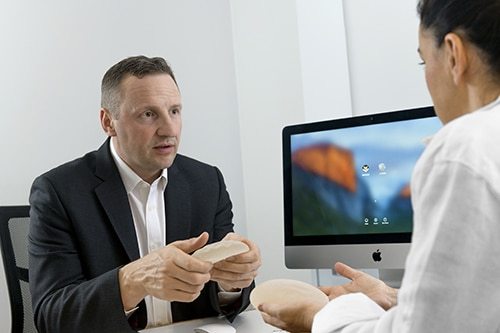
Dr Kernohan can review your health, previous breast surgery, pathology, imaging and cancer treatment, then examine you and discuss realistic outcomes, benefits, limitations and risks. You may need more than one appointment to absorb the information and ask questions before deciding.
Suitability depends on your goals, general health, ability to recover, smoking or nicotine use, and the timing of chemotherapy or radiotherapy. Cancer treatment does not automatically rule out reconstruction; the team should assess timing and options with you individually.
Ask what result is possible, whether further procedures may be needed, and how treatment or donor-site scars could affect the plan. A registered specialist plastic surgeon should explain alternatives and obtain informed consent.
BRING TO YOUR VISIT
Details that help your surgeon
- Referral, imaging, pathology and relevant operation reports
- Cancer treatment history, including any planned chemotherapy or radiotherapy
- Medicines, allergies, medical conditions and smoking or nicotine use
- Your priorities for breast shape, recovery time and future procedures
PROCEDURE CHOICES
Three broad ways to reconstruct a breast.
Breast reconstruction is usually performed under general anaesthesia. The source article gives an example operation time of two to eight hours, but duration depends greatly on the chosen procedure and its complexity. Ask your surgeon for the expected plan in your case.
01 · IMPLANT OR EXPANDER
Using an implant
An implant may be placed directly or after a tissue expander has gradually made room beneath the skin. Discuss implant follow-up, possible replacement and whether cancer treatment affects this option.
02 · TISSUE FLAP
Using your own tissue
Skin and fat, sometimes with muscle, may be moved from the abdomen, back, thigh or buttock. TRAM uses abdominal tissue; a latissimus dorsi flap uses back tissue. A pedicled flap retains its original blood supply, while a free flap is reconnected at the chest.
03 · DIEP FLAP
Abdominal tissue with muscle spared
A DIEP flap transfers lower-abdominal skin, fat and blood vessels while usually preserving the abdominal muscle. It involves microsurgery and a donor-site scar. Compare suitability and trade-offs with other flap techniques.
The best approach is individual. Some reconstructions combine techniques or include later surgery to refine shape or symmetry.
AFTER SURGERY
Plan for recovery and support.
Hospital stay and recovery differ substantially between implant and flap operations. Pain, swelling and fatigue are expected early on; drains may be used to manage fluid. Your team will explain wound care, medicines, walking, follow-up and help at home.
The source article suggests swelling may improve over roughly eight to ten weeks and the result may continue settling for up to a year. These are examples, not a promised timetable. Wait for your surgeon’s advice before returning to work, lifting, strenuous exercise or other full activities.
A reconstructed breast may look and feel different from the original. Breast shape can change over time and some people choose further refinement. Attend review appointments and follow your personal discharge instructions.
MAKE A PRACTICAL PLAN
Ask before you leave hospital
- Who to call about bleeding, fever, increasing pain or swelling
- Whether you will have drains and how they are managed
- When to wear a surgical bra and when to return to work
- When you can drive, lift, exercise and attend follow-up
INFORMED CONSENT
Understand the possible risks.
All surgery carries risks. These may include bleeding, infection, wound-healing problems, fluid collection, scarring, asymmetry, changes in sensation, anaesthetic complications and the need for another operation. Implant reconstruction can involve implant-related problems; flap reconstruction can involve donor-site problems or loss of transferred tissue.
Your surgeon should explain the risks most relevant to your health and proposed technique, how they are reduced and what would happen if a complication occurred.
COSTS & COVER
Ask for an individual written quote.
Breast reconstruction fees vary by technique, complexity, hospital, surgeon and anaesthetist fees, length of stay and what is included in follow-up. Ask for an itemised quote after consultation and clarify what a later stage or revision would cost.
Reconstruction after mastectomy may qualify for Medicare benefits and private health cover, depending on the procedure, current item criteria and your policy. Do not assume a rebate or full coverage. Ask the clinic for proposed item numbers and confirm benefits and out-of-pocket costs with Medicare and your insurer.

COMMON QUESTIONS
Questions to discuss with your surgeon.
Is breast reconstruction a major surgery?
It can be a substantial operation under general anaesthesia, particularly when tissue is transferred from another part of the body. Your surgeon will explain the operation, hospital stay and risks for your plan.
How long does it take to recover?
Recovery varies with the technique, your health and any further treatment. Ask about the likely hospital stay, help at home, return to work and activity restrictions for your procedure.
Do I need to wear a bra after breast reconstruction?
Your team may recommend a supportive surgical bra. The fit and duration depend on the procedure and wound care; follow your surgeon’s instructions.
How can nipples be reconstructed after mastectomy?
Nipple reconstruction or a medical tattoo may be discussed as a later stage. Availability and timing depend on your reconstruction, cancer treatment and preferences.
How long does pain last?
Pain and discomfort are common early on, but the course differs between people and procedures. Your team will provide pain relief advice and explain which symptoms need review.
How much time should I take off work?
This depends on your operation and the physical demands of your job. Ask for a personalised estimate and clearance before returning to lifting or strenuous tasks.
Will a reconstructed breast have feeling?
Sensation is often different from the original breast and may change over time. Some feeling may return, but normal sensation cannot be guaranteed.
What can I do to support recovery?
Follow your discharge plan, attend appointments, take medicines as directed, avoid nicotine, eat well and ask for help when needed. Contact the team if symptoms worsen or you are unsure about a restriction.
How long will I stay in hospital?
The stay depends on whether you have an implant or flap procedure, your recovery and any complications. Confirm the expected stay during consultation.
What kind of bra should I wear after surgery?
Your surgeon may recommend a soft, supportive, non-underwired post-operative bra. Ask about the size, fastening and when it is safe to change bras.
How many operations might I need?
Some people have reconstruction in one stage; others need an expander, later implant exchange, symmetry procedure or nipple reconstruction. Ask what stages are likely and which are optional.
YOUR NEXT STEP
Start with a conversation.
Contact Pure Visage to confirm current breast reconstruction consultation availability with Dr Kernohan and what records to bring. Your options can be discussed without committing to surgery.
Explore related care
Explore our plastic surgeons · Patient Information · Referrer information