


SPECIALIST CARE · SOUTH WEST SYDNEY
Skin Graft Surgery in South West Sydney
Learn why a skin graft may be recommended, how it differs from a flap and what to discuss about care of both the graft and donor site.
UNDERSTANDING YOUR CARE
Start with a clear assessment.
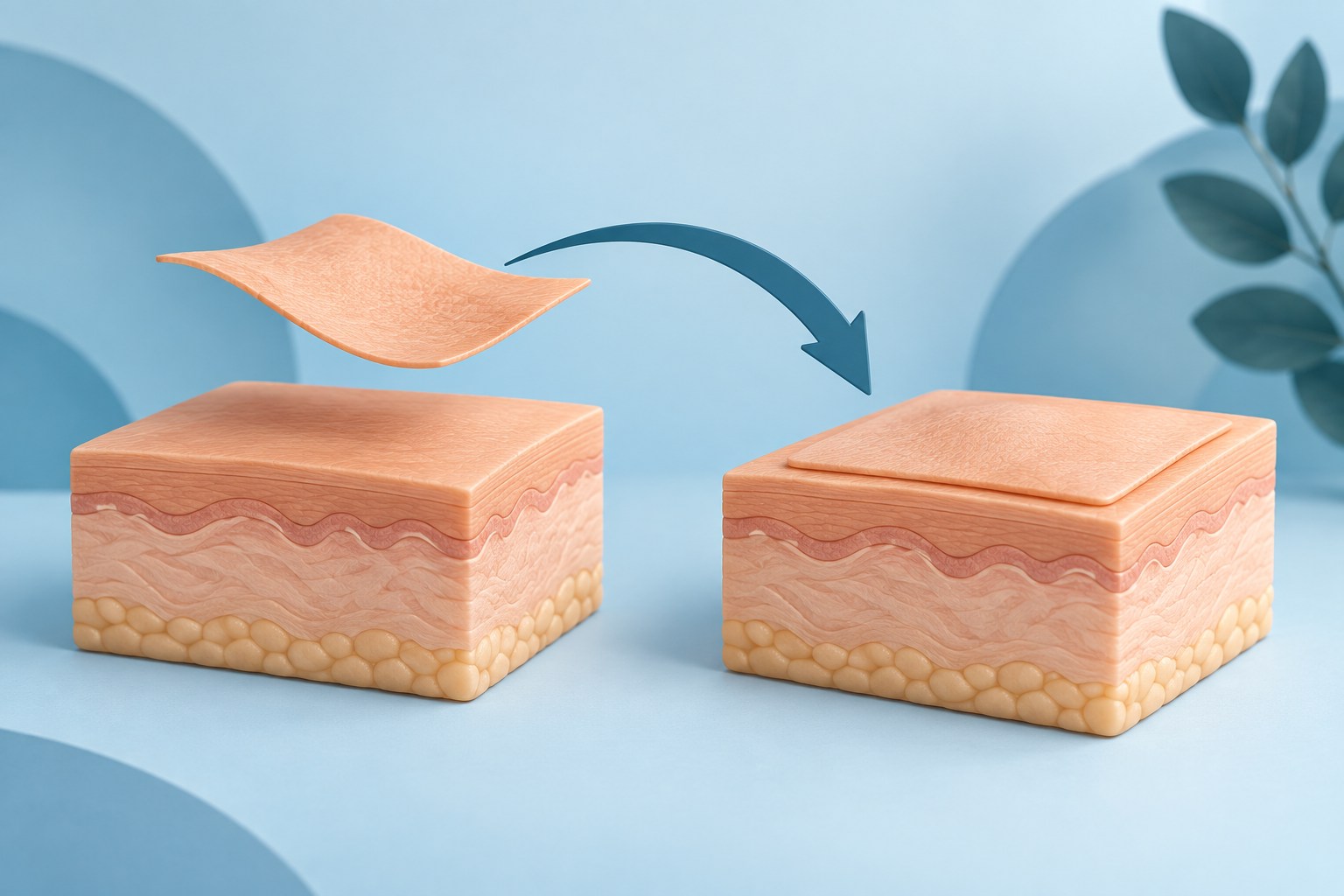
A skin graft transfers skin from a donor site to cover another area. It may be used when a wound cannot be closed directly, including after skin cancer removal. A graft is different from a flap, which moves tissue with its own blood supply.
At Pure Visage, your consultation provides time to review the information, consider alternatives and ask what the proposed plan means for you.
BEFORE YOUR VISIT
Bring the details that matter.
- Your referral and pathology or biopsy reports
- Details of previous skin treatments
- A current medication list and allergies
- Your questions and practical concerns
Ask the team how to provide medical documents securely. Please keep online enquiries brief.
WHY A GRAFT?
When direct closure is not the best fit.
After skin cancer removal, some wounds can be closed with stitches. Others need a different repair because of their size, depth or location. A skin graft places skin from a separate donor site over the wound. Your surgeon will compare this with direct closure, a local flap or another reconstructive option.
Skin graft
The transferred skin does not bring its own blood supply. It must attach to a suitable wound bed and develop a new supply during healing.
Local flap
Nearby skin and underlying tissue are moved while retaining their blood supply. A flap may be preferable when depth, blood supply or function makes grafting less suitable.
Plan for function and appearance
Your surgeon considers movement, contour, colour and texture, as well as the likely scars at both the graft and donor sites. No repair can guarantee an exact skin match.
TREATMENT PLANNING
The decisions to discuss.
01
Choose the repair
The size, depth and location of the wound help guide whether a graft, flap or another approach is suitable.
02
Plan both sites
Ask where donor skin may come from, which type of graft is proposed and how both areas will be dressed.
03
Protect healing
A graft needs to establish a blood supply from the wound beneath it. Follow the specific dressing and movement instructions provided by your surgical team.
GRAFT TYPES
Which type of graft may be used?
Most permanent skin grafts for these repairs use your own skin, called an autograft. The proposed type depends on the wound and the donor site. Other temporary coverings or more complex grafts are used for selected situations and are not routine for every skin cancer wound.
Split-thickness graft
This includes the outer skin layer and part of the dermis. It can cover a larger area. The donor site heals as a separate wound under its own dressing.
Full-thickness graft
This includes the epidermis and the full thickness of the dermis. It is often used for smaller defects when a thicker graft is helpful. The donor site usually needs to be closed with stitches.
Composite graft
Selected small, shaped defects may require a graft that includes skin and another tissue such as cartilage. Your surgeon can explain if this specialised option is relevant.
Temporary donor skin or synthetic dressings may be used in other wound-care settings. They do not replace the need to plan a durable repair when one is required.
DONOR SITE & PROCEDURE
Planning both places that need to heal.
Choose the donor site
The team considers skin thickness, colour and texture, the size of the wound, how the donor site can be closed or dressed, comfort, movement and the scar it may leave. The closest-looking skin is not always the best or safest choice.
Prepare and secure the graft
The wound must be suitable for grafting. The graft is shaped and secured with stitches, dressings or another method to keep it in contact with the wound bed. The donor site is closed or dressed according to the type of graft.
Allow the graft to take
“Graft take” means the transferred skin attaches and develops a blood supply from the wound beneath it. Dressings and limits on movement help prevent the graft from lifting or shearing while it is fragile.
Ask which anaesthetic and setting are planned for your operation, whether another person should take you home, and when the first dressing review will occur.
AFTER YOUR PROCEDURE
Recovery is individual.
Both the graft and donor site need care. Follow the dressing instructions for each site, keep the graft protected from friction and movement, and ask when the first review is planned. Healing varies with the graft, wound, donor site and your health. The graft may change colour or texture as it heals, and sensation can take time to return. Some grafts do not heal fully and may need further treatment.
Discuss risks before deciding.
Possible risks include bleeding, infection, fluid collecting beneath the graft, scarring, altered sensation, delayed healing and partial or complete graft loss. Both the graft and donor site can have complications. The procedure and your health affect your individual risk.
Ask which warning signs require prompt contact with your surgical team, and how to reach them after hours.
FEES & MEDICARE
Ask for an individual estimate.
The cost depends on the skin cancer procedure, graft type, anaesthetic, facility and complexity of reconstruction. Request an itemised estimate that includes surgeon, facility, anaesthetist and pathology fees where relevant. Medicare or private health benefits may apply when eligibility criteria are met; out-of-pocket costs vary.
Read about fees and Medicare or contact the clinic about a consultation and estimate.
MAKE SPACE FOR YOUR QUESTIONS
Take these questions to your consultation.
- Why is a graft recommended instead of direct closure or a flap?
- Where will the donor skin come from?
- What will the graft and donor-site scars look like?
- What restrictions and follow-up will I need?
Will grafted skin match the surrounding skin?
Colour, texture and contour may differ, and scars remain. Appearance changes during healing and cannot be guaranteed. Discuss realistic expectations for your site.
When can I return to normal activities?
There is no single timetable. The site, graft size, your health and healing progress affect advice about work, exercise and other activities.
Are these real before-and-after photographs?
No. The images on this page are AI-generated conceptual artwork. They do not depict patients, demonstrate a surgical result or replace medical assessment.
How do I prepare for a skin graft?
Bring your referral, pathology reports and medication list to the consultation. Ask about the anaesthetic, transport, smoking, medicines and any instructions for the day of surgery. Do not stop prescribed medicines unless your treating clinician tells you to.
How do I care for the graft and donor site?
You will have care instructions for two areas. Keep dressings as advised, protect the graft from rubbing and movement, and attend the planned review. Contact the surgical team if you notice concerning bleeding, increasing pain, spreading redness, fever or a dressing problem.
What happens if the graft does not take?
A graft can partly or fully fail to attach. The team will assess the cause and discuss wound care, further dressings or another procedure if needed.
Will a skin graft be covered by Medicare?
Benefits may apply when the procedure meets Medicare criteria. Ask for an individual estimate and check any private health benefits and out-of-pocket costs.
EXPLORE RELATED CARE
Understand the next part of your care.
Melanoma Surgery
Understand the surgical pathway after a melanoma diagnosis, from review of your pathology to decisions about excision and further assessment.
Skin Cancer Reconstruction
Planning the repair is part of planning your care. Explore how your surgeon balances wound closure, function and appearance after skin cancer removal.
Further reading: Australian Society of Plastic Surgeons: skin cancer surgery · Cancer Council: surgery for skin cancer · NHS: caring for a skin graft and donor site · Dr Kernohan’s skin graft article. General information only; your treating clinician can advise on your circumstances.
PURE VISAGE · GREGORY HILLS
Let’s talk about your next step.
Contact our team about a specialist consultation. Bring your referral and available pathology reports so the discussion can focus on your individual care.
Suite 17, 13 Digitaria Drive, Gledswood Hills NSW 2557 · 1300 393 899
Explore related care
Explore our plastic surgeons · Patient Information · Referrer information